A balanced, progressive budget for Culver City
Click here to take the City's budget survey.
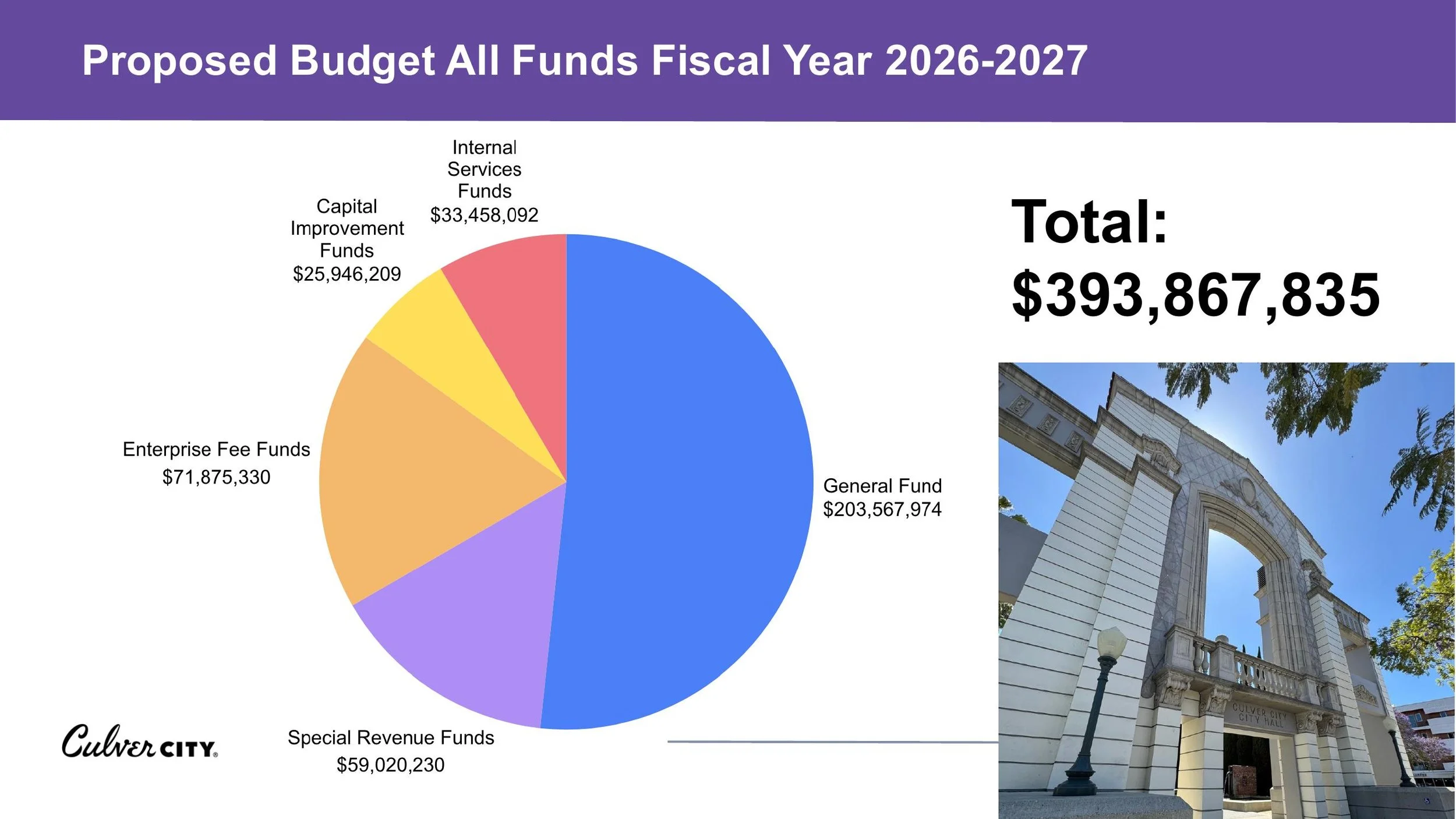
Culver City has released its draft 2026-27 Budget — and there's a lot of good news for families, students, and seniors. Affordability, community connection, and quality of life are the big winners this year.
A Balanced, Progressive Budget
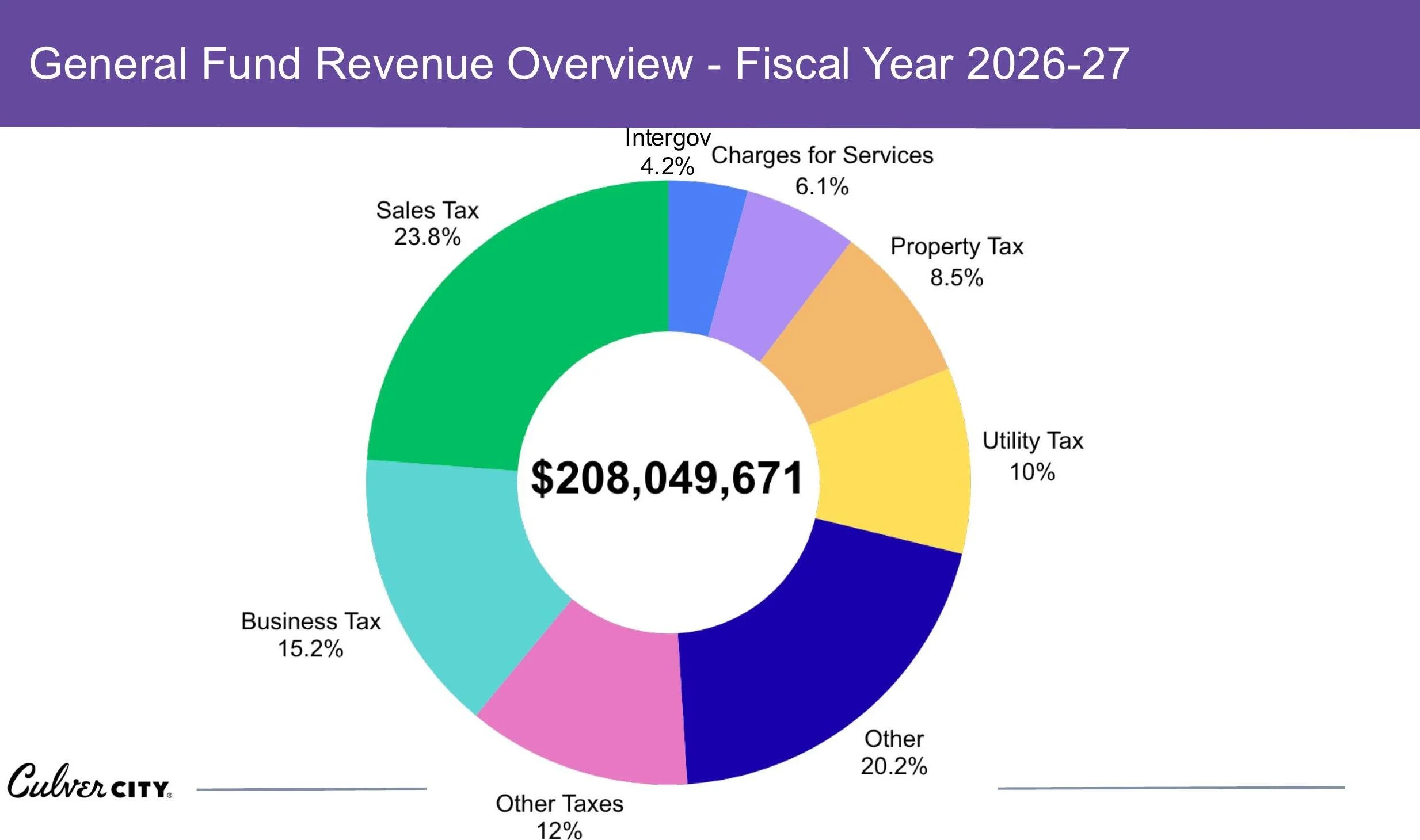
Like many cities across the county, Culver City had projected a significant deficit for 2026-27. The $26.5M shortfall in Culver City has created enormous pressure for budget cuts. But in his first budget as City Manager, Odis Jones delivered a balanced proposal to City Council that includes new investments in community priorities and avoids layoffs in any City department.
The proposed budget is focused on increasing opportunities to live, work, play, and learn in Culver City — the kind of quality-of-life issues that matter to families, seniors, and businesses in our community.
"This budget represents a real revolution in how the City invests its resources. We're putting people at the center and building around their needs. With everything we do, we ask ourselves: how is this making life in Culver City better, easier, and more enjoyable for the people who live, work, or visit here."— Mayor Freddy Puza
Investing in Affordability
Mayor Puza declared affordability his top priority at his December swearing-in, and the proposed budget puts real dollars behind that commitment:
$5M for Affordable Housing to fund the Ballona Creek Affordable Housing initiative along with other future projects
$400K for a Housing Stability Strategy to support working residents staying in Culver City and to attract additional funding, including:
Creation of an Affordable Housing Trust
Forgivable loans for small businesses, including childcare facilities
A pilot Universal Basic Income (UBI) program, modeled on successful efforts in West Hollywood and Stockton, to support housing and workforce stability for cost-burdened families
These investments reflect a key City strategy: fund new ideas, evaluate what works locally, then scale solutions with a mix of public and private funding.
Public Spaces and Community Safety
Parks, sidewalks, and safe streets are the connective tissue of daily life in Culver City. This budget makes the City's largest-ever commitment to infrastructure — replacing aging facilities and creating new opportunities to come together as a community.
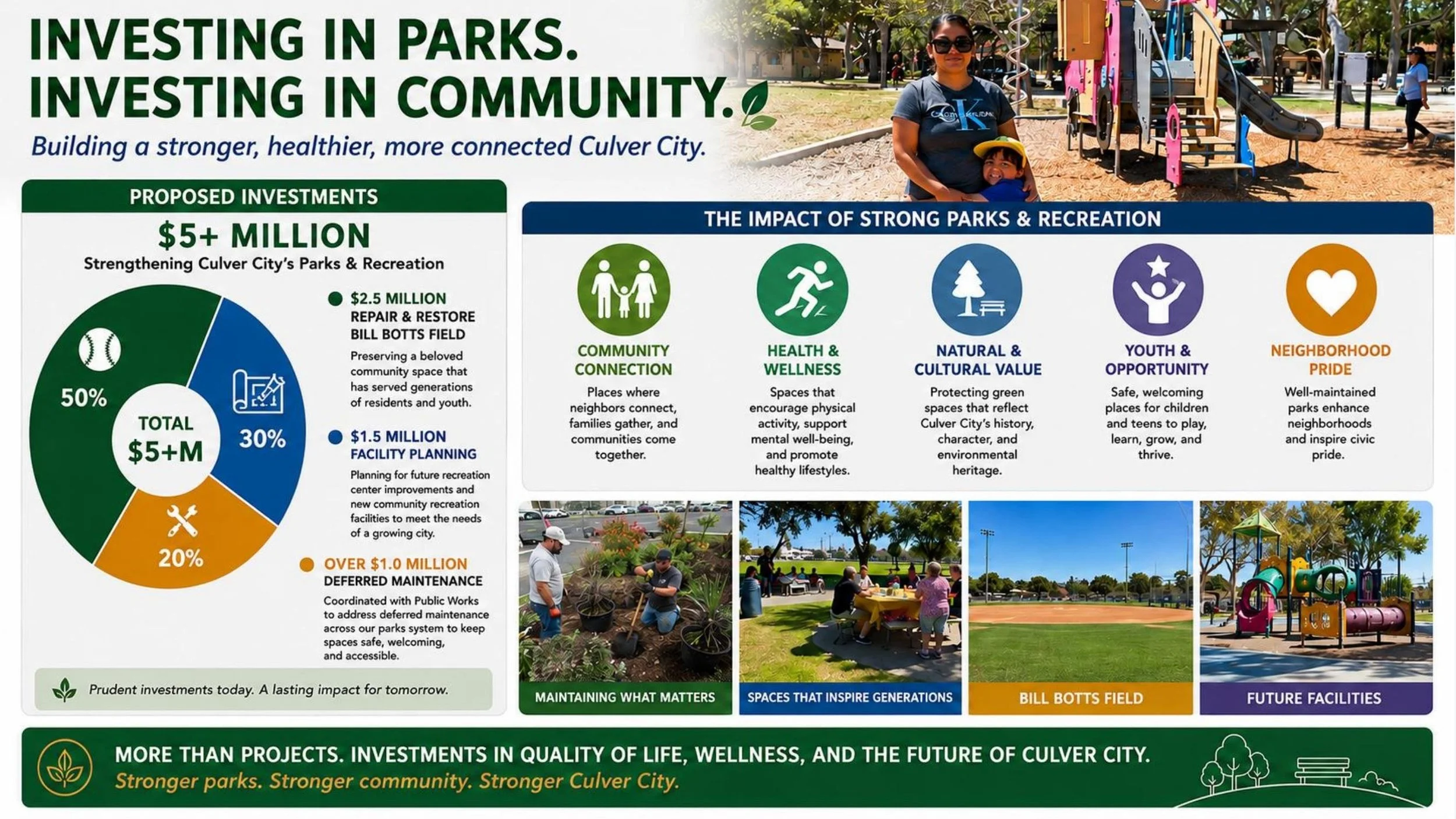
$2.5M for Bill Botts Field improvements, a top community priority
$1M for Sidewalks — a 300% increase from last year's budget
$2M for Street Repaving, doubling the prior commitment of miles repaired
$1.5M for Median Improvements in Downtown Culver City and the Arts District, supporting local businesses and keeping our City core an attractive destination
Schools and Safety for Kids
$1.5M in support for Culver City Unified School District (CCUSD) to partially offset reduced state funding, bringing the City's total commitment over two years to $4M. As CCUSD stabilizes its funding, the City will have the opportunity to reallocate these dollars to support families with young kids by expanding city-funded child care.
$3M for Safe Streets Corridors, continuing improvements on Overland Ave near schools and the public library, along with the Tri-School Area Safety Study — making it safer and easier to walk, bike, and drive in our community
$2M for Street Repaving to improve traffic flow and road safety
Economic Development
Local small businesses are essential to a healthy economy and to the everyday quality of life that makes Culver City special. This budget introduces two new programs to support them:
A Jumpstart Permit Reimbursement Fund to make launching a new small business easier in the City
A Small Business Catalyst Program connecting existing businesses with local experts who can help improve operations and prepare for growth
Community Engagement
The City has begun a new chapter in how it listens. Community input is now a top priority in budgeting, infrastructure, and planning decisions. City Manager Odis Jones launched his tenure with a series of "Let's Talk, Culver City" community sessions — and the results show: Bill Botts Field improvements, the Better Overland redesign, and the tripled sidewalk budget all came directly from residents sharing their priorities.
Ways to stay engaged:
Budget Survey — The City still wants to hear from you before the budget is finalized
Civic Assembly — a new approach to budget and planning decisions, continuing into 2026-27
2 new staff positions dedicated to community engagement and transparency
The Joint Powers Agreement (JPA)
One of City Manager Jones' first contributions was identifying an underutilized financial tool called a Joint Powers Agreement (JPA) — an authorization to issue bonds for community development investment, used previously in our City.
Culver City's last major redevelopment initiative, in the early 2000s, focused on revitalizing Downtown and borrowed over $250M to make Culver City a regional destination. The biggest beneficiary of public investment was the billionaire developer Michael Hackman, owner of the Culver Studios and The Steps. Much of the money available at the time for housing redevelopment was untouched or used for “administrative” purposes.
This time, the focus is squarely on community needs and infrastructure.
The current JPA includes:
Up to $39.9M in borrowing for specific projects in housing, parks, and streets
Spreading costs over the long term — much like a mortgage — to enable significant near-term improvements
$12M to replenish City reserves by repaying Jubilo Village housing loans
$5M for Affordable Housing
$7.75M for streets, sidewalks, and alleys
$1.5M for parks and $500K for tree canopy maintenance
The Path Forward
Long-term financial stability requires maximizing City revenue and minimizing non-productive expenses. Sustaining a progressive, community-focused budget — and expanding the programs being piloted this year — will require ongoing funding commitment, paired with regional grants from public and philanthropic sources. The path forward is an all-of-the-above approach to funding community priorities.